
About The Book
About the Book
Unveil Her Gaze
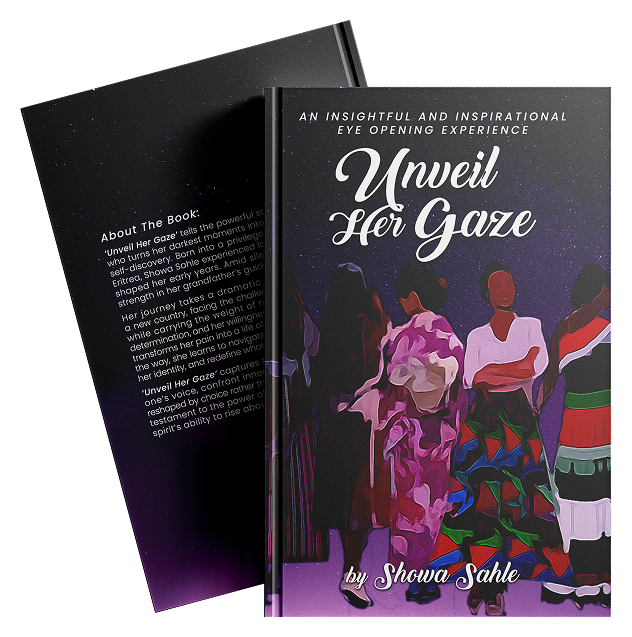
Unveil Her Gaze unfolds in layered chapters that move from the sunlit streets of Asmara to the shadowed interiors of memory. We meet Lamu as a cherished child in a mansion filled with laughter, strong coffee, and the steady presence of a grandfather who believes education can free a nation. We watch that world fracture: a conference on children’s rights becomes the stage for her father’s poisoning; her mother’s mind slowly collapses under unimaginable grief; and a trusted chauffeur-cousin exploits cultural silence to prey on a little girl too young to name what is happening to her.
From there, the book widens its lens. Showa braids intimate scenes of caregiving, school days, church visits, and markets with the brutal history of Eritrea: colonial wounds, the Derg’s terror, massacres of students and civilians, forced displacement, and the corridors of exile. Italy becomes both refuge and reminder, a place where new foods, languages, and rituals mingle with the ache of everything left behind.
This is not a sensationalized account but a crafted testimony. Showa writes with honesty about faith that wavers yet endures, about the cost of being the “strong one,” and about the work of turning repressed memories into integrated truth. By the final chapters, the abused child has become a woman who speaks out, discovers she was never the only victim, and begins building a circle of survivors committed to naming harm and choosing healing over silence.
Why Read It
Some memoirs invite sympathy from a distance. Unveil Her Gaze invites participation. Reading Lamu’s story means stepping into the complicated truth of what it is to grow up loved and harmed, privileged and silenced, brave and frightened at the very same time.
If you are a survivor of abuse, war, or family trauma, this book gives language to experiences many have had to carry alone. If you work with communities: educators, faith leaders, therapists, advocates, it offers an unflinching, human-scale view of how culture, politics, and silence can either protect children or expose them to devastating harm.
Showa does not romanticize pain, nor does she minimize it. She shows how faith can coexist with questions, how loyalty can be complicated by truth, and how one woman’s decision to speak can open the door for others to step forward. Readers leave with more than a moving story; they leave with a deeper understanding of resilience, boundaries, justice, and the sacred task of listening when someone says: This happened to me.